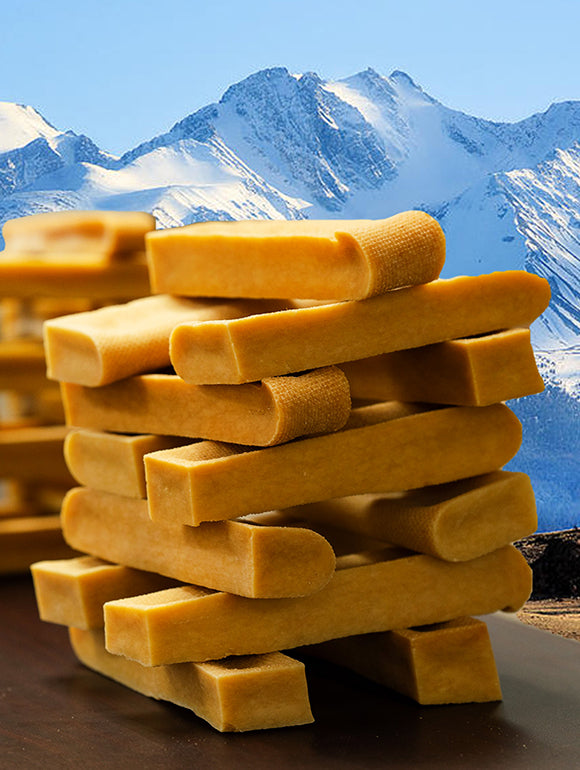
Yak Chew Size Guide: How to Choose the Right Size for Your Dog


Ever bought your dog a chew that looked reasonable in your hand, only to watch it nearly disappear between their jaws? Dogs have a funny way of changing our sense of scale.
A useful yak chew size guide starts with your dog's weight, then checks mouth fit and chewing style. Choose a piece your dog can't easily take completely into the mouth, then supervise as it gets smaller.
What size yak chew should you get for your dog?

Start with the manufacturer's weight recommendation, then look at the dog in front of you. Dogs at the same weight can have different mouth shapes and chewing habits.
The American Animal Hospital Association's chew-sizing guidance recommends chews that extend beyond the snout and are wider than the mouth. The American Kennel Club's edible-chew sizing advice recommends choosing a piece too large to fit completely inside the mouth.
Before the first session, hold the chew beside your dog's muzzle. If the entire piece can disappear easily into the mouth, choose a larger appropriate option.
Quick fit check: Start with weight. Check that the chew extends beyond the mouth. Consider whether your dog slowly gnaws, forcefully cracks, or tries to gulp. Stay nearby for every session.
Why doesn't weight alone decide the right size?
Body weight doesn't predict chewing behavior. A 20-pound dog that gently gnaws may handle a chew differently from another dog of the same weight that tries to swallow large pieces.
The ASPCA's guidance on matching chews to dogs recommends selecting products according to both size and chewing habits. It warns that small chews can be swallowed whole.
That makes mouth fit the second check. Recheck the fit as your dog works through the chew rather than treating a weight label as a safety guarantee.

Does your dog's chewing style change the size you should choose?

Yes. AAHA describes three broad chewing styles:
- Passive chewers: Gentle dogs that rarely damage their toys.
- Moderate chewers: Dogs that may tear soft toys but are less destructive with sturdier ones.
- Aggressive chewers: Powerful chewers that may destroy toys quickly or gulp treats.
The AAHA's description of aggressive chewing highlights the importance of observing how a dog handles a chew.
The ASPCA's advice on gradual chewing discourages rapid consumption of durable chews.
Watch your dog during a supervised session. Does the dog gradually work on the surface, bite with considerable force, or attempt to swallow large pieces? That behavior should influence whether the chew is suitable.
Should aggressive chewers get a bigger yak chew?
AAHA's general chew-toy guidance recommends sizing up for aggressive chewers. A larger fit may reduce the chance of swallowing an entire item, but that recommendation doesn't establish that hard yak cheese chews are suitable for aggressive chewers.
Yak milk chews are very hard. AAHA's warning about tooth fractures identifies yak milk chews among products that can damage teeth.
If your dog cracks hard chews forcefully rather than gnawing gradually, don't assume that choosing a larger size removes the danger. Ask your veterinarian about a more suitable chewing option.
When has a yak chew become too small?
A good starting fit won't stay that size forever. As your dog works through a yak chew, the remaining piece becomes smaller and may eventually fit entirely inside the mouth.
The ASPCA's warning about swallowing small chews explains the choking and blockage concern. The AKC's specific advice about yak-chew leftovers recommends removing a yak chew when its remaining size creates a hazard.
There's no universal inch measurement suitable for every dog. Recheck the piece regularly, and remove it before your dog can swallow it whole.
If your dog has swallowed a substantial chunk, contact your veterinarian rather than waiting for symptoms.

Connclusion
Choosing the right yak chew isn't only about weight. Start with the manufacturer's guidance, check the fit, observe your dog's chewing habits, and reassess as the piece gets smaller.
Remember that size cannot eliminate the dental risks of very hard chews. When in doubt, ask your veterinarian whether a yak cheese chew is appropriate.
Ready to compare options? Explore Yak & Paws Himalayan Yak Cheese Dog Chews and review the product's sizing instructions before choosing.
References
- American Animal Hospital Association (n.d.). Don't Chew on This!. Available at: https://www.aaha.org/dont-chew-on-this/
- American Society for the Prevention of Cruelty to Animals (n.d.). Position Statement on Dog Chews/Treats. Available at: https://www.aspca.org/about-us/aspca-policy-and-position-statements/position-statement-dog-chewstreats
- Gibeault, S. (2024). How to Pick Safe, Edible Dog Chews. American Kennel Club. Available at: https://www.akc.org/expert-advice/nutrition/choosing-edible-chews-for-dogs/
Frequently asked questions
What size yak chew should I get for my dog?
Start with the manufacturer's weight recommendation, then check your dog's mouth size and chewing habits. Select a chew too large to fit entirely inside the mouth. Supervise chewing and reassess as the piece becomes smaller.
Can I give my dog a larger yak chew?
A larger chew may make whole-item swallowing less likely, but it still needs to be manageable. Going bigger doesn't eliminate the risk of tooth damage from very hard chews. Choose a suitable product rather than assuming the largest option is safest.
Can a yak chew be too small for a dog?
Yes. A yak chew that's small enough to swallow whole can create choking or intestinal blockage risks. The appropriate size depends on the dog's mouth and chewing behavior, not just body weight.
What should I do when a yak chew gets small?
Take it away before the remaining piece becomes easy to swallow whole. Follow the manufacturer's instructions for handling suitable leftovers, or discard the piece if it's damaged or contaminated.