Are Yak Chews Safe for Puppies? Age, Teething & Chewing Guidelines


Puppies will chew almost anything they can reach - shoes, furniture, your fingers, and apparently that one corner of the rug they find irresistible.
Are yak chews safe for puppies? A hard yak chew may not suit every puppy, especially during dental development. Age matters, but so do the teeth currently in your puppy’s mouth, chewing style, chew hardness, and supervision.
Are yak chews safe for puppies?

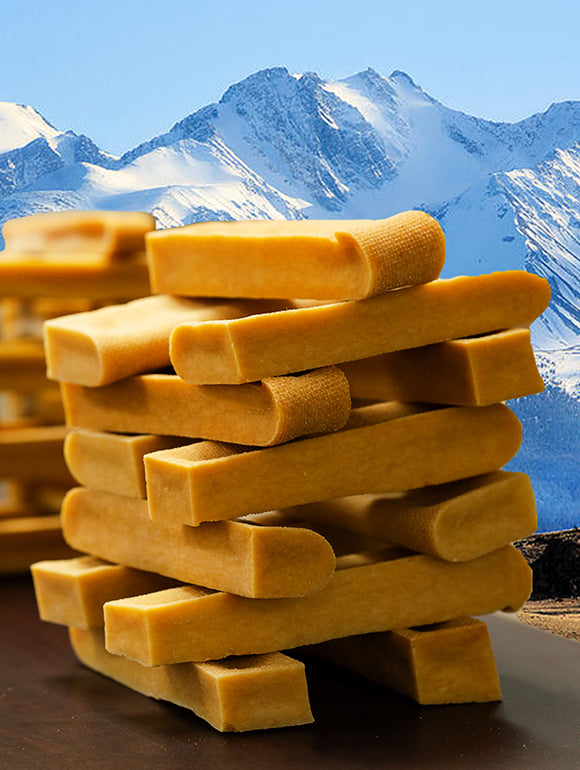
Yak & Paws describes its unflavored chew as “very hard; meant for slow, satisfying chewing”. That hardness deserves extra attention with puppies.
VCA Animal Hospitals says most veterinary dentists recommend against hard objects for puppies since hard objects can break both baby and adult teeth.
So there isn’t a responsible universal answer such as “every puppy can have a yak chew at four months.” A puppy going through major dental changes may need a softer chewing option. Ask your veterinarian whether a very hard chew suits your puppy’s current dental development.
What age can puppies have yak chews?
Online minimum-age advice varies, and puppies do not all finish dental development on the same birthday.
VCA says baby teeth begin falling out at around 12 weeks as permanent teeth start erupting . It notes that permanent teeth have normally erupted and baby teeth have fallen out by around six months .
The current Yak & Paws product page does not state a puppy minimum age, so we should not invent one. Ask your veterinarian about your puppy’s teeth before introducing a very hard chew.

What about yak chews for teething puppies?
VCA notes that chewing appears to ease discomfort associated with teething. That does not mean the hardest chew is the best teething option.
During the transition to permanent teeth, a very hard object can put developing teeth at risk. Choose a puppy-appropriate option with some flexibility and ask your veterinarian before moving to a very hard chew.
If your veterinarian considers a hard chew appropriate, watch how your puppy uses it. Slow gnawing is different from forceful crunching.
How should you introduce a yak chew to a puppy?

If your veterinarian considers a hard chew suitable, make the first session an observation session.
- Choose an appropriately sized chew that your puppy cannot easily fit entirely inside their mouth.
- Stay nearby and watch how your puppy chews.
- Stop if your puppy repeatedly tries to crack or snap the chew.
- Check the chew as it becomes smaller.
- Remove it if chewing behavior changes or you notice dental discomfort.
Yak & Paws calls for supervision during chewing . The company offers its unflavored chew from X-Small through Everest Edition , but detailed size selection belongs in the dedicated sizing guide rather than this puppy-safety article.
When should you stop the chew?
Take the chew away if your puppy is forcefully crunching it rather than gradually working at the surface.
Stop for injury-related bleeding, a visible broken tooth, unusual mouth sensitivity, reluctance to eat, or a sudden change in chewing behavior. A suspected broken tooth deserves veterinary attention.
VCA recommends supervision even with recommended puppy toys since no toy is completely risk-free .

Conclusion
Puppies need to chew, but the hardest option is not the goal. Match the chew to your puppy’s dental development, supervise every session, and ask your veterinarian before introducing a very hard chew. Once your pup is ready, explore the related Yak & Paws safety guides for safer chew choices.
References
- VCA Animal Hospitals (n.d.). Teeth, Teething and Chewing in Puppies. Available at: https://vcahospitals.com/know-your-pet/teeth-teething-and-chewing-in-puppies
- American Kennel Club (n.d.). When Will My Dog’s Permanent Teeth Come In?. Available at: https://www.akc.org/expert-advice/health/dogs-permanent-teeth/
- Yak & Paws (n.d.). Unflavored Himalayan Yak Cheese Dog Chews. Available at: https://www.yakandpaws.com/products/unflavored-dog-chew
Frequently asked questions
Can puppies have Yak & Paws Crunchy Puffs instead of a hard yak chew?
Yes. Yak & Paws’ Crunchy Puff is a lighter, softer-bite alternative to its traditional hard yak chew and is recommended by the brand for dogs of all sizes, including puppies and seniors. It is made from the same yak and cow milk base as the original chew but is microwaved to create a light, airy texture. Supervise your puppy while feeding and consider their individual dental development and dietary needs.
Are yak chews good for teething puppies?
Teething puppies have a strong urge to chew, but a very hard chew is not automatically a suitable teething product. Veterinary guidance recommends caution with hard objects that can break puppy teeth.
What age can puppies have yak chews?
There is no universal evidence-based minimum age for every puppy. Dental development varies, and Yak & Paws does not currently publish a puppy minimum age. Ask your veterinarian when a hard chew is appropriate.
Are yak chews too hard for puppy teeth?
They may be. Yak & Paws describes its unflavored chew as very hard, and veterinary guidance warns that hard objects can fracture baby and adult teeth. Your puppy’s dental stage and chewing behavior matter.