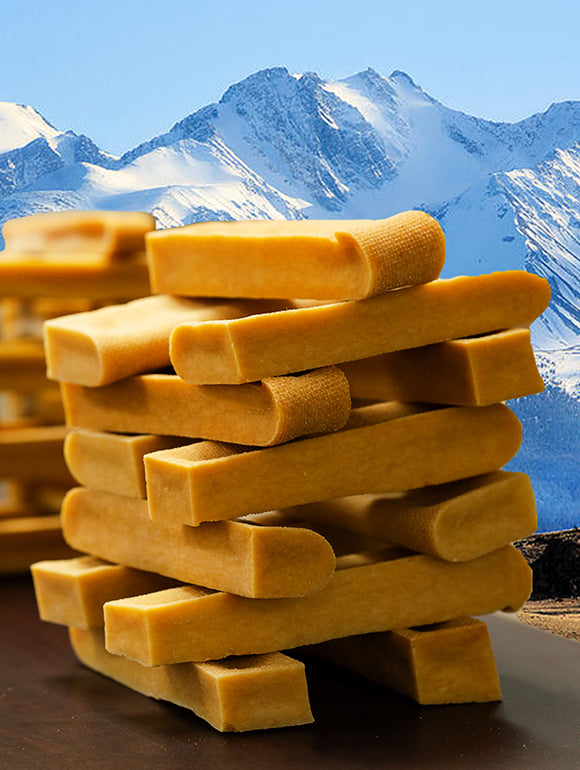
Why Himalayan Dog Chews Are a Friend to the Planet


Yak chews might seem like just a tasty, long-lasting snack for your pup but there’s a whole eco-story behind them. Imagine sitting by a Himalayan hearth as shepherds wring whey from boiling yak milk, pressing curds into one of history’s toughest cheeses. When my own dog clamped onto one of these ancient treats, I realized I was witnessing centuries-old sustainability in action. These hard yak cheese chews are fermented and dried in the cold mountain air so thoroughly that, as BBC Travel reports, “chhurpi can be eaten for up to 20 years.” In other words, one chew can last your dog (and you) for months or even years. That extreme shelf-life means fewer spoiled treats in the trash a big win against food waste.
Key takeaway: Himalayan yak chews are naturally ultra long-lasting. By enduring for years, they slash waste giving your dog a treat that’s both durable and inherently eco-friendly
Mountains and Meadows: Farming the Old Way

These chews wouldn’t exist without yak herds, and yak farming has its own green side. Yaks thrive on high-altitude pastures unsuitable for crops, grazing on native grasses without needing grain or fertilizer. This low-input system is surprisingly gentle on the planet. For example, methane emissions from yaks are naturally low: a study published in BMC Microbiology show that a yak produces “less methane (per unit of live weight) compared to other ruminants, such as cattle.” A new analysis in Communications Earth & Environment confirms this – scientists found yak herds emit roughly 40% less methane than predicted by standard models of IPCC. In short, yaks are sort of “energy-saving” livestock, producing fewer greenhouse gases than many cows.
Beyond emissions, yak grazing actually nurtures ecosystems. A recent Pastoralism study highlights how traditional yak herding supports mountain habitats. Yak herders make use of virtually every animal resource they weave blankets from yak hair, use hides for tents, and even burn yak dung for fuel when wood is scarce. This last bit is key: burning dung instead of wood helps protect fragile Himalayan forests. Seasonal yak migrations also benefit the land. By moving herds between summer and winter pastures, overgrazing is avoided and grasslands get time to recover, according to the same study. In fact, researchers in the Pastoralism study note that yak grazing “surpasses the growth of woody vegetation,” keeping invasive shrubs in check and maintaining open forage. These age-old practices turn yaks into ecosystem helpers, keeping highland meadows healthy.
Key takeaway: Healthy yak herds mean healthier mountains. Free-roaming, migratory yaks emit far less methane than typical cattle and their grazing patterns preserve alpine grasslands. By supporting yak farmers, we help protect these environments.
Waste Not, Want Not: Milk to Chew Toys

In remote Himalayan villages, every drop of milk counts. Traditionally, herders turned surplus milk into chhurpi so nothing spoiled during harsh winters. The Guardian reports that “as well as being one of the best ways to use excess milk, churpi sustains them during harsh winters in the mountains.” In other words, making these hard cheeses was a clever zero-waste strategy. When modern markets opened up, turning chhurpi into a dog chew gave an extra boost: it solved a surplus problem by creating steady demand. As one reporter notes in The Guardian, exporting Himalayan chews “solved the problem of excess milk going to waste as demand fluctuates.” Today dozens of cooperatives in Nepal are churning out yak cheese treats, ensuring that no milk gets poured down the drain when prices fall.
This thriftiness ties into the environment: wasting dairy means wasting all the water and feed that went into it. By upcycling extra milk into a durable pet treat, Himalayan communities eliminate spoilage and the need for throwaway snacks. And because the chews are so hard and long-lasting, they often outlive any flimsy commercial treats that might mold or rot. Each yak chew is essentially a permanent, nutritious snack a far cry from the short-lived chews that can’t last a week on the shelf.
Key takeaway: Himalayan yak chews epitomize “waste not” they use every bit of excess milk to make a treat that won’t spoil. By diverting surplus dairy into century-old cheese, these treats help farmers avoid food waste and put natural resources to good use.
A Treat You Can Feel Good About
So what does this all mean for your dog’s next chew? It means that when you hand over a Himalayan yak stick, you’re not just giving a long-lasting snack you’re backing sustainable traditions. These treats celebrate a circular approach: they’re crafted from local milk (often herders’ byproduct), fermented naturally, and chewed for months. They support a community guarding ancient grazing landscapes. In short, Himalayan yak chews pack multiple green benefits into one tough chew.
Next time your pup gnaws on one, remember: behind that resilient treat is a story of nature-friendly farming, zero-waste habit, and even low carbon livestock. That’s something an eco-conscious dog parent can really enjoy.

Key takeaway: Choosing Himalayan yak chews is a small but meaningful way to help the planet these natural, long-lasting treats reduce waste and support regenerative yak farming, all while delighting your dog.
References
- BBC Travel (2021). Chhurpi: The world's hardest cheese?
- The Guardian (Vallangi, 2023). Curd instinct: ancient Nepali food reborn as dog chews in US
- Rai et al. (2023). Economics of Yak herding in the Kanchenjunga landscape of the Eastern Himalayas. Pastoralism journal.
- Jing et al. (2025). Methane emissions from indigenous nitrogen-efficient bovidae are overestimated. Communications Earth & Environment.
- Huang et al. (2012). Comparison of methanogen diversity of yak (Bos grunniens) and cattle (Bos taurus). BMC Microbiology.
Frequently Asked Questions
If yak chews can last 20 years on the shelf, does that mean they're made with preservatives?
No, the extraordinary shelf life comes entirely from the traditional production process, not preservatives. Pressing, drying, and often smoking the cheese drives moisture below 10%, creating an environment where bacteria and mould cannot grow. This is the same principle behind other long-lasting fermented and dried foods throughout history. The only ingredients are milk and lime or lemon juice, nothing synthetic.
How do yak herd migration patterns actually help the environment?
Traditional yak herding moves animals between summer high-altitude pastures and winter lower valleys, following seasonal forage availability. This rotation prevents any single area from being overgrazed, allowing vegetation to regenerate fully before the next season. Research published in the journal Pastoralism shows this movement also suppresses invasive woody shrub growth, maintaining open meadow habitat essential for alpine biodiversity. It's a low-input livestock management system refined over centuries of observation.
Wouldn't buying locally produced dog treats be more environmentally responsible than importing from Nepal?
It depends on what you're comparing. Import emissions are real but often smaller than production emissions for heavily processed treats. A locally produced treat that involves intensive grain farming, chemical preservatives, and synthetic coloring may have a larger overall footprint than an imported natural chew made from low-input yak milk. Life cycle assessment, looking at total production-to-disposal impact, matters more than origin alone. That said, supporting local pet economies has its own merits.
Are Himalayan dog chews recognized by any environmental or sustainability organizations?
At the time of writing, Himalayan chews as a category don't carry a widely recognized environmental certification like B Corp or Rainforest Alliance. However, the inherent production characteristics of minimal ingredients, low-input farming, and waste repurposing align strongly with sustainability principles. Some producers are working toward fair-trade certifications that validate humane sourcing and fair wages for Himalayan farmers. As eco-labeling in the pet industry matures, formal certifications are likely to follow.