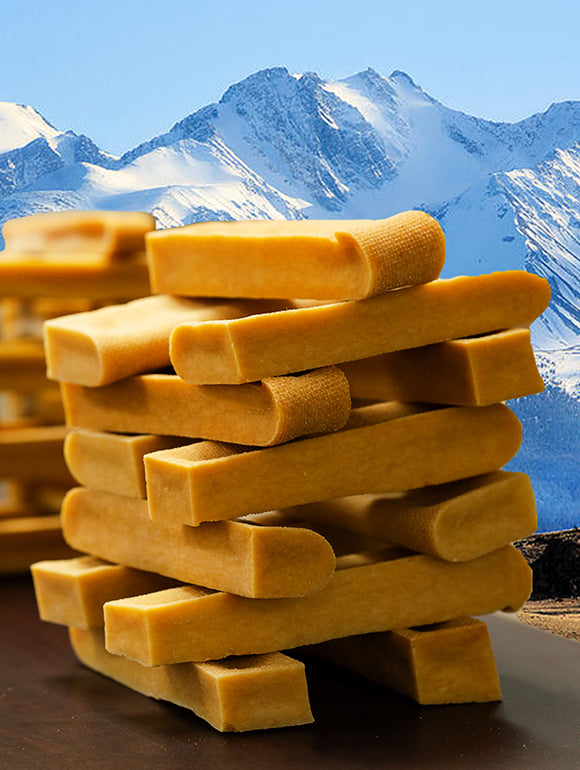
The Environmental Benefits of Himalayan Dog Chews


Sustainable sourcing at the farm

It all starts with the milk. Yak & Paws sources fresh cow and yak milk from small local farms and its own pastures in the Himalayas and its foothills. These cows graze on green grasslands without harmful feeds or additives. Buying local milk cuts down on fuel for shipping and helps mountain farmers earn a steady income. The milk is simply pasteurized and skimmed, vwith just a squeeze of lemon added—no artificial preservatives or fillers. By using only natural ingredients (milk and lime, no salt), Yak & Paws keeps its carbon footprint low and delivers a 100% natural treat.
Turning waste into value

Yak & Paws finds a use for every byproduct, so almost nothing goes to waste. After making the cheese curds that form the chew, the leftover liquid (called whey) is not tossed out. Instead, Yak & Paws feeds whey to pigs on its farm. In other words, what was once waste becomes nutritious livestock feed. This clever repurposing keeps whey out of drains and landfills. The result is a genuine win-win: no extra waste in the environment and nutritious feed for pigs.
Clean energy from biogas
The company is also investing in renewable energy. In their new dairy plant, Yak & Paws plans to build a biogas system that turns manure and other organic scraps into methane gas. This biogas can power the plant’s equipment or fuel local stoves in Jhapa district of Nepal. By replacing wood or diesel with methane from its own waste, Yak & Paws will cut air pollution and greenhouse gases. This clean-energy project is still ramping up, but it shows how smart engineering can use nature’s recycling to keep the lights on.
Empowering local farmers and communities
Every chew supports people as well as the planet. Yak & Paws buys milk from hundreds of Himalayan farm families, giving them reliable income. Many of these farmers use grazing methods that protect the mountain ecosystem and reduce soil erosion. The company also trains its factory workers in hygiene and eco-friendly practices, which helps build good jobs. Together, this network of farms and facilities strengthens mountain communities and rewards traditional skills. In short, Yak & Paws treats not only strengthen dogs’ bodies—they strengthen families and landscapes too.
Long-lasting chews, less waste

Yak & Paws chews are famously durable. Made of hardened cheese, one chew can last a single dog for hours or days. That means you use fewer treats and less packaging overall. Because each chew is so long-lasting, there’s less leftover trash when the treat is gone. The treats themselves are made of just milk and lime, so once they’re finished, there’s nothing artificial left behind. Even small shavings break down easily. By design, these chews leave almost no waste: they give dogs a long-lasting chew and leave nature undisturbed.
Yak & Paws’ green commitment

Yak & Paws combines an age-old cheesemaking tradition with modern green practices. From farm to package, every step is tuned to save resources and cut waste. The result is a treat that’s healthy for dogs and gentle on the earth. When you choose a Yak & Paws Himalayan chew, you’re getting a premium snack and supporting local farmers, reducing waste, and backing clean energy. That’s a win for your pup and a win for the planet.
Frequently Asked Questions
How does choosing a Himalayan cheese chew actually reduce my environmental impact compared to other treats?
Several factors compound: long-lasting chews mean fewer treats purchased and less packaging waste per week. Milk-and-lime ingredients require no synthetic manufacturing inputs, no production of preservative chemicals, and minimal processing compared to heavily industrialized treats. Producers like Yak & Paws also repurpose whey as livestock feed and plan biogas systems so the supply chain generates minimal waste at every stage, unlike treats made from chemically treated hide or imported synthetic ingredients.
Is yak farming genuinely more sustainable than conventional cattle farming?
Research suggests that, under traditional management, yes. Yaks produce significantly less methane per unit of body weight than cattle, graze on native alpine vegetation without requiring grain or synthetic fertilizer, and their seasonal migration patterns allow grasslands to recover, reducing overgrazing. A 2025 study in Communications Earth & Environment found that yak methane emissions were roughly 40% lower than IPCC standard predictions. However, industrial-scale yak farming would carry different trade-offs.
Does the packaging of Himalayan dog chews offset the environmental benefits of the product?
Packaging impact varies by brand. Resealable pouches extend chew life and reduce spoilage-related waste, but single-use plastic pouches still contribute to packaging waste. Responsible brands are moving toward recyclable, compostable, or minimal packaging. When evaluating the eco-credentials of any chew, look at both the product itself and its packaging and check whether the brand uses biodegradable or recyclable materials.
Does Yak & Paws' biogas project mean their facility is carbon neutral?
Not yet, the biogas initiative is still ramping up and represents a commitment to future sustainability rather than a current carbon-neutral certification. Biogas systems convert organic waste (manure, food scraps) into methane, which can replace fossil fuels and meaningfully reduce the facility's carbon footprint. Full carbon neutrality would require additional measures, including renewable energy for all processing and offsetting residual emissions. Watch for third-party certifications as the initiative matures.