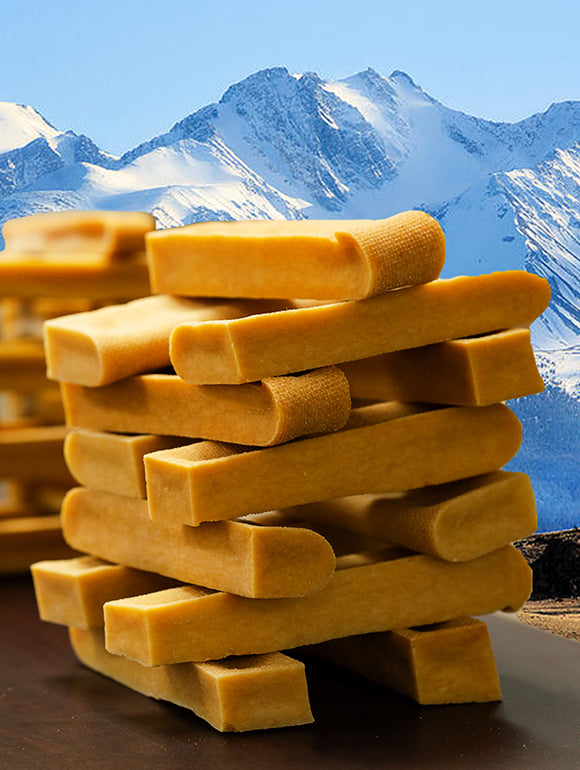
Himalayan Yak Dog Chews: Why These Long-Lasting Treats Stand Out


Dogs (and their humans) often notice that a Himalayan yak chew lasts for ages. In fact, these treats – made from an ancient Himalayan cheese called chhurpi – are essentially giant rock-hard cheese bars. One study in Journal of Ethnic Foods even calls chhurpi “the hardest cheese known in the world”. That extreme hardness is a big clue to why these chews keep dogs busy so much longer than most treats.
High-Protein, Low-Moisture Composition

A lot of a Himalayan chew’s durability comes down to its ingredients and make-up. According to a study in Journal of Ethnic Foods, hard chhurpi has about 63% protein by dry weight, only around 7% fat and about 10% moisture. In other words, almost the entire chew is lean protein (mostly casein) and minerals. There’s very little water or fat to break down. This makes the chew super dense and dry – a dog has to really work at it to wear it down.
The American Kennel Club notes that yak-cheese chews use only a few simple ingredients (yak’s and cow’s milk, salt and lime) and end up very hard (Yak & Paws chews are manufactured without using any salt). The Club points out the low lactose content, which means most dogs digest them well, and emphasize that these chews “are hard enough to be long-lasting”. Essentially, it’s a high-protein, natural dog chew with no fillers.
Key Factors for Extreme Durability:
- Extreme Hardness: Chhurpi is essentially solid cheese. Its very nature is hard – the Journal of Ethnic Foods even hails it as the world’s hardest cheese.
- High Protein Content: ~63% protein means a lot of casein that forms a tough matrix. Dogs have to chew much longer to break down protein than fat or moisture.
- Low Moisture (<10%): Almost no water remains. Dried down to ~10% moisture, the treat is like chewing a dehydrated bar – it just doesn’t soften easily.
- Minimal Fat: Only ~7% fat. Low fat means it doesn’t smear or disintegrate; the dog is chewing through solid material, not greasy layers.
- Simple Ingredients: Made from milk, lime, and salt – no starches or grain fillers. Nothing in the recipe encourages softening.
Ancient Drying Process

It’s not just what’s in the chew, but how it’s made. Traditional Himalayan chhurpi is fermented and then dried for weeks or months. Shepherds sun-dry or smoke the pressed cheese curds until they become as hard as rocks. In fact, villagers in the Himalayas have used hard chhurpi as a kind of chewing gum for extra energy in cold winters, as noted in Discover Food – because it truly can be chewed on indefinitely. That long smoke- or sun-drying drives out sugars and moisture, preserving the block.
The result is a shelf-stable, ultra-durable block. Unlike soft baked treats or cartilage that crumble, a Himalayan yak chew stays intact. As a dog gnaws on it, the cheese will gradually soften and flake into edible shavings, but only very slowly. (The drying also converts much of the lactose into lactic acid, so even lactose-sensitive dogs usually handle it fine, as indicated by The American Kennel Club.) All of this means no big pieces break off easily – the chew simply wears down bit by bit, making it last a very long time.
How They Compare to Other Chews

Stack up a Himalayan yak chew next to a bully stick or rawhide, and you’ll spot the difference. Bully sticks are high in fat and have more moisture; dogs can bite off chunks or soak them, so they disappear faster. Rawhide is even riskier – it may not soften much and can pass through undigested. By contrast, the hard cheese base of Himalayan chew softens gradually under the dog’s saliva. These yak-cheese treats slowly soften as dogs chew, making them safer and more digestible than rawhide. In practical terms, your dog will tinker with a Himalayan chew for hours or days, whereas a bully stick might be gone in one session.
Because Himalayan chews soften down into digestible bits, they generally don’t pose the same choking or blockage risk as a big chunk of rawhide. And unlike antlers or hard bones that can splinter, Himalayan yak chews break down by wear and tear, not sharp snaps although poorly processed Himalayan chews with extremely low moisture level can splinter. At Yak & Paws, we monitor drying and moisture profiles closely to keep the chews within the range that maintains hardness without becoming brittle).
Why Dogs (and Owners) Love Them
All these factors combine to make Himalayan yak chews super durable, long-lasting dog treats. They scratch the chewing itch harder and longer than most snacks, which means dogs get more mental and dental engagement from one treat. The hard surface can even help scrape plaque. For pet parents, it’s great value: one chew lasts ages.
In the end, it’s tradition and composition at work. A Himalayan yak chew is basically a concentrated, smoke-dried cheese brick. Its high protein, low fat and low moisture formula, plus the slow drying process, make it something only the toughest canine jaws can conquer quickly. So when your dog takes on a Himalayan yak chew, just remember: it’s not that they’re “cheating” – they’re working through an engineered super-chew. And that’s why these natural dog chews last so very long.

References
- American Kennel Club (2023). How to Choose Edible Dog Chews That Are Also Safe. (AKC Expert Advice on Yak Chews)
- Journal of Ethnic Foods (2023). Exploring trade prospects of Chhurpi and the present status of Chhurpi producers and exporters of Nepal
- Discover Food (2024). Nutritional quality and microbial diversity of Chhurpe from different milk source
Frequently Asked Questions
Why does my dog's Himalayan chew last two days while my friend's dog finishes one in an hour?
Chew duration varies enormously by dog. Aggressive power chewers (typically larger breeds, working breeds, or young adult dogs) apply more pressure and wear down the surface faster. Less intense chewers, seniors, small breeds, or naturally calmer dogs take far longer. The same chew can last anywhere from under an hour to several days, depending on chewing style, jaw strength, and how much time per day the dog has access to it.
What should I do when the chew gets too small for my dog to chew safely?
When the piece becomes small enough that your dog could swallow it whole, take it away before that happens. You don't have to throw it out. Place the last nub in the microwave for 45–60 seconds, and it will puff up into a light, crunchy cheese treat your dog can eat safely. This microwave trick is one of the most popular features of Himalayan chews and ensures zero waste while giving your dog a safe, enjoyable final reward.
Are Himalayan chews harder on teeth than bones or antlers?
Generally less so. Bones and antlers can be hard enough to fracture teeth because they don't yield under pressure; they're essentially mineral. Himalayan chews, while very firm, gradually soften under the dog's saliva, meaning they give slightly rather than being completely unyielding. This makes them safer for enamel than antlers or large raw bones, though they're still firm enough that dogs with existing dental work should be supervised.
Do Himalayan chews lose their nutritional value the longer a dog works on them?
Slightly, but not significantly, in practice. As a dog chews, the outermost layers are worn away, and some minor surface oxidation occurs. However, the core of the chew retains its protein, mineral, and nutritional composition throughout. The nutritional difference between a fresh chew and one chewed on over several days is minimal. The caloric and protein contribution per chewing session remains consistent.